
NILD Educational Therapy Techniques
CET uses a combination of Orton/Gillingham methodology and NILD Educational Therapy techniques to help boost a student’s learning abilities. These techniques address reading and math skills, self-regulation, critical and analytical thinking, and generally improve academic achievement. Research has proven these techniques to be effective tools to address dyslexia, dyscalculia, reading deficits, ADD, and ADHD.

Listen & Repeat

Improves listening skills, concentration skills, and memory skills.
Technique: The therapist reads a short phrase to the student, and the student repeats it. The therapist reads another short phrase to the student, has them repeat it, and then joins the two phrases. This is repeated several times, adding a short phrase each time. The goal is to repeat several sentences word-for-word without prompting.
Phonics & Reading

Improves reading skills at every level.
Technique: Using the orton/gillingham approach, the student is taught phonics from letter sounds, rhyming, syllabication, syllable types, and word attack by analyzing each section of a word.
Reading comprehension: Students are given reading passages on their reading level to practice oral fluency, word attack, and comprehension.
Above-level reading: Students are given a reading passage above their reading level, and the therapist guides them as they read, helping with word attack, pronunciation, and comprehension skills.
Math Block

Improves math skills at every level.
Technique 1: Therapist guides student to memorize addition and subtraction facts, and multiplication and division tables, using skip counting and memory practice. Parents are encouraged to also practice at home.
Technique 2: Rapid Calculation. The therapist names a list of numbers to add, subtract, multiply, or divide on their level. Example for a 6th-grade student: 8 + 6- 3 × 5 / 2. The student is required to work each problem in their head, step by step. 8+6=14-3 = 11 × 5 = 55 /2 = 27.5. This technique teaches listening, concentration, and number skills.
Technique 3: Math Written Problems; the student is given a written problem on their level to read orally, then name the operation that is needed to solve the problem (addition, subtraction, multiplication, division). They then solve the problem, check it by using the opposite operation and explain the process. This builds oral reading skills, reading comprehension skills, math analytical skills, and expression skills.
Rythmic Writing

INILD Rhythmic Writing Explained
Rhythmic Writing is a core technique in NILD Educational Therapy that integrates movement, rhythm, and verbalization to strengthen cognitive, motor, and language skills in students with learning differences.
Purpose and Benefits
NILD uses Rhythmic Writing to:
Build cognitive efficiency by engaging multiple brain systems at once — language, memory, attention, and motor control.
Improve handwriting and fine motor coordination.
Support reading and writing fluency by reinforcing sequencing, memory, and cross-lateral movement (crossing the midline).
Boost confidence by making learning engaging and structured.
It is especially useful for students with dyslexia, dysgraphia, dyscalculia, ADHD, Auditory Processing Disorder, and Autism Spectrum Disorder, as it addresses underlying processing weaknesses rather than just symptoms.
How It Works
In practice, students:
Move through structured patterns (often in an “8” shape or figure-eight motif) while counting aloud.
Combine motor patterns with verbalization to reinforce learning.
Use colored chalk and varied techniques to maintain engagement.
Progress from simple motifs to more complex patterns, increasing memorization and challenge over time.
This process strengthens:
Sequencing and memory through rhythm and repetition.
Attention and focus by keeping tasks engaging and varied.
Integration across the brain via cross-lateral movement.
Implementation
NILD therapists tailor Rhythmic Writing to each student’s needs, adjusting:
Complexity (motif size, letter count, sentence length).
Pacing and feedback frequency.
Themes and interests to keep motivation high.
Puzzles
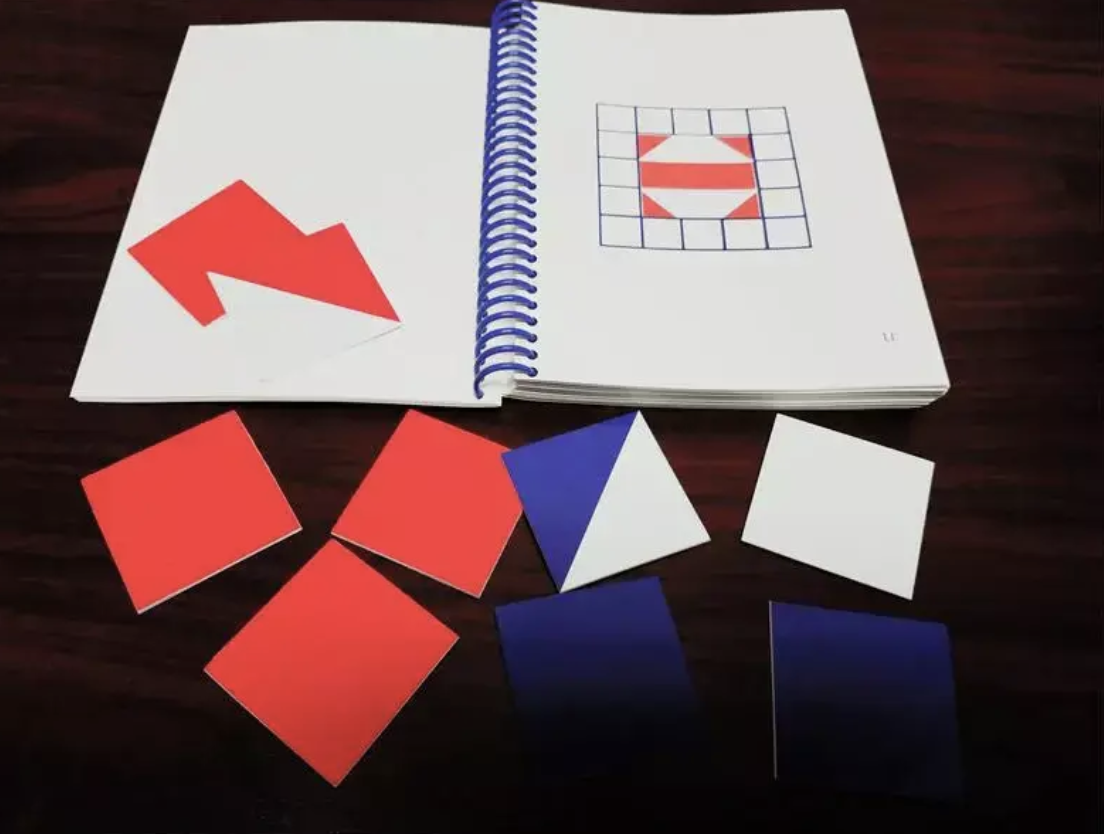
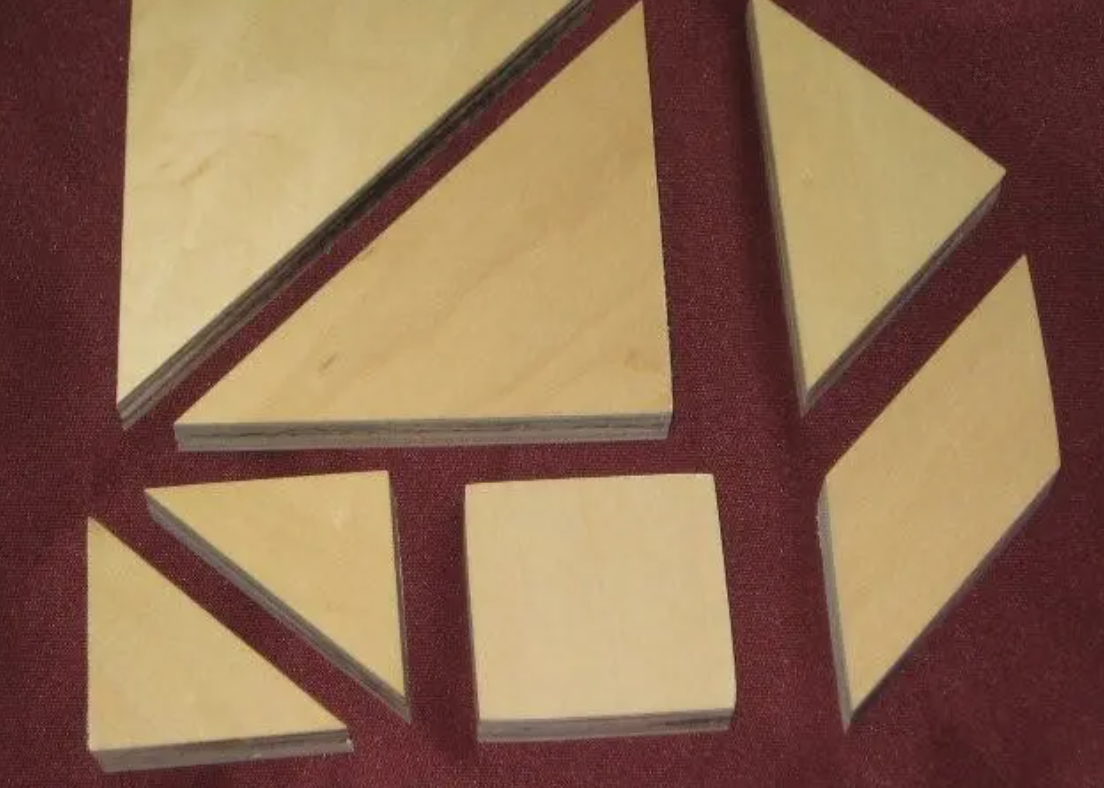
The NILD puzzle techniques are part of the National Institute for Learning Development (NILD) Educational Therapy approach, designed to support students with learning differences by engaging them in structured, multi-stage activities that build cognitive, perceptual, and memory skills.
1. Square Puzzles Technique
Purpose: Develops visual-spatial reasoning, pattern recognition, and memory recall.
Materials: 15-card set with unique designs, often using red/white/blue tiles
Process:
Copy stage – Students replicate the puzzle layout exactly.
Recall stage – Students reconstruct the puzzle from memory without looking at the original.
Guidelines: Complete all 15 puzzles in the copy stage before progressing to recall.
Focus areas: Seeing the whole, recognizing relationships, using prior knowledge, and verbalizing strategies.
2. Pythagoras Puzzle Technique
Purpose: Enhances spatial reasoning, geometric understanding, and problem-solving.
Materials: Wooden geometric puzzle pieces (seven shapes).
Process:
Match – Students match pieces to their correct positions.
Copy – Students reproduce the puzzle layout.
Recall – Students build the puzzle from memory.
Guidelines: Introduce pieces gradually, ensuring familiarity before moving to recall.
Common Principles Across Puzzle Techniques
Staged progression: Always move from concrete (copying) to abstract (recall) to build independence.
Guided strategy development: Therapists help students identify patterns, use dominant-hand building, and maintain consistent orientation.
Cognitive and perceptual skills: These techniques target visual-auditory processing, executive functions, and memory, which are often underdeveloped in students with dyslexia or other learning challenges.
In summary: NILD puzzle techniques like Square Puzzles and Pythagoras are structured, multi-stage activities that combine tactile, visual, and verbal engagement to strengthen spatial reasoning, memory, and problem-solving skills, making them valuable tools in NILD’s broader educational therapy program.
differences.
Purpose and Benefits
NILD uses Rhythmic Writing to:
Build cognitive efficiency by engaging multiple brain systems at once — language, memory, attention, and motor control.
Improve handwriting and fine motor coordination.
Support reading and writing fluency by reinforcing sequencing, memory, and cross-lateral movement (crossing the midline).
Boost confidence by making learning engaging and structured.
It is especially useful for students with dyslexia, dysgraphia, dyscalculia, ADHD, Auditory Processing Disorder, and Autism Spectrum Disorder, as it addresses underlying processing weaknesses rather than just symptoms.
How It Works
In practice, students:
Move through structured patterns (often in an “8” shape or figure-eight motif) while counting aloud.
Combine motor patterns with verbalization to reinforce learning.
Use colored chalk and varied techniques to maintain engagement.
Progress from simple motifs to more complex patterns, increasing memorization and challenge over time.
This process strengthens:
Sequencing and memory through rhythm and repetition.
Attention and focus by keeping tasks engaging and varied.
Integration across the brain via cross-lateral movement.
Implementation
NILD therapists tailor Rhythmic Writing to each student’s needs, adjusting:
Complexity (motif size, letter count, sentence length).
Pacing and feedback frequency.
Themes and interests to keep motivation high.